How Close Are We to Curing Cancer?
Why the Answer Is More Complicated—and More Hopeful—Than You Think
For more than half a century, humanity has been fighting what many have called the “War on Cancer.”
Billions of dollars have been invested. Millions of researchers, physicians, and scientists have dedicated their careers to understanding this disease. Countless patients and families have been affected by cancer’s emotional, physical, and financial burden.
Yet one question continues to capture our imagination:
How close are we to curing cancer?
The answer is both complicated and surprisingly hopeful.
The reality is that we are unlikely to discover one magic pill that cures every form of cancer. But that doesn’t mean we are losing the fight. In fact, many experts believe we are entering one of the most exciting periods in the history of cancer research.
For some cancers, cure rates are already remarkably high. For others, treatments are improving rapidly. And emerging technologies—including artificial intelligence, personalized vaccines, advanced imaging, and blood-based cancer detection—are accelerating progress at a pace that would have seemed impossible just a decade ago.
Perhaps the better question is not whether we will find one cure for cancer.
The better question may be:
Can we transform cancer from a deadly disease into something that is preventable, manageable, or even curable for many more people?
Increasingly, the answer appears to be yes.
Cancer Is Not One Disease
One of the biggest misconceptions about cancer is that it is a single disease.
It is not.
Cancer is actually an umbrella term that includes more than 200 different diseases.
Breast cancer behaves differently than pancreatic cancer.
Lung cancer behaves differently than leukemia.
Even within the same type of cancer, no two tumors are exactly alike.
A breast cancer in one patient may have completely different genetic mutations than a breast cancer in another patient.
This complexity is one reason why finding a universal cure has been so difficult.
Cancer is incredibly adaptable.
Tumors can mutate, develop resistance to treatment, and evolve over time.
In many ways, cancer is less like one enemy and more like hundreds of different enemies.
The good news is that medicine is increasingly learning how to identify and target these differences.
Why the Future Looks More Hopeful Than Ever
There has never been a better time in human history to receive a cancer diagnosis than today.
That statement may sound surprising, but survival rates for many cancers have improved dramatically over the past several decades.
People are living longer.
Treatments are becoming more precise.
Screening methods are improving.
Researchers understand cancer biology far better than they did even twenty years ago.
Many experts believe we are witnessing a transition from generalized cancer treatment toward precision cancer medicine.
Instead of treating all patients the same way, physicians can increasingly tailor treatment based on the individual characteristics of each person’s cancer.
This shift is transforming oncology.
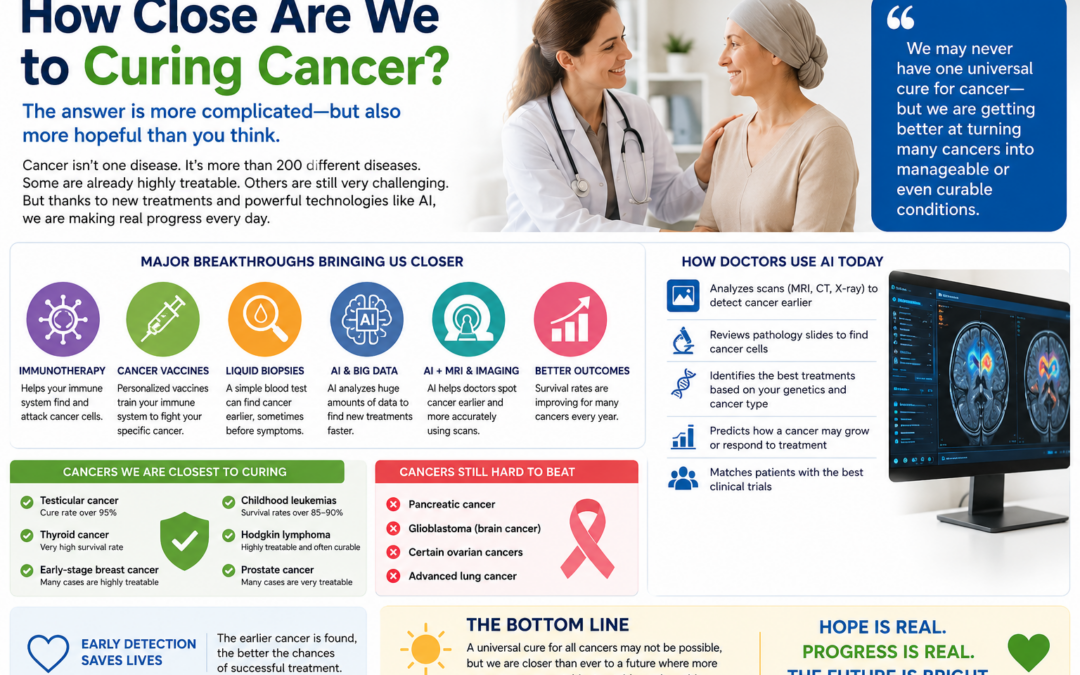
Which Cancers Are Closest to Being Cured?
Some cancers already have very high cure rates when detected early.
Testicular Cancer
Testicular cancer is one of the most curable cancers.
Five-year survival rates exceed 95 percent in many cases, and even advanced disease often responds remarkably well to treatment.
Thyroid Cancer
Many forms of thyroid cancer have excellent outcomes and high long-term survival rates.
Early-Stage Breast Cancer
When diagnosed early, many forms of breast cancer can be treated successfully.
Advances in targeted therapies and personalized treatment continue to improve outcomes.
Childhood Leukemias
Certain childhood leukemias that once carried devastating prognoses now have survival rates exceeding 85 to 90 percent in many cases.
This represents one of modern medicine’s greatest success stories.
Hodgkin Lymphoma
Hodgkin lymphoma has become highly treatable and often curable, especially when detected early.
Prostate Cancer
Many prostate cancers grow slowly and are highly treatable, particularly when discovered before spreading.
Which Cancers Remain the Most Difficult?
Some cancers remain extraordinarily challenging.
Pancreatic Cancer
Pancreatic cancer often causes few symptoms until later stages and can spread quickly.
Glioblastoma
This aggressive brain cancer remains one of the most difficult forms of cancer to treat.
Certain Ovarian Cancers
Ovarian cancer is frequently diagnosed after it has already progressed.
Advanced Lung Cancer
Although treatments have improved significantly, advanced lung cancer continues to present major challenges.
The encouraging news is that even these difficult cancers are seeing promising developments through AI, genetics, immunotherapy, and earlier detection strategies.
The Rise of Immunotherapy
One of the biggest breakthroughs in modern cancer treatment is immunotherapy.
For decades, treatment largely relied on surgery, chemotherapy, and radiation.
Immunotherapy introduced an entirely new approach.
Instead of directly attacking cancer cells, immunotherapy helps the body’s own immune system recognize and destroy cancer.
This strategy has produced remarkable results.
Some patients with advanced melanoma who once had limited treatment options are now experiencing long-term survival.
Certain lung cancers, bladder cancers, kidney cancers, and blood cancers have also shown impressive responses.
Immunotherapy is not a cure for every patient.
However, for some individuals, it has produced results that would have been considered nearly miraculous only a generation ago.
Personalized Cancer Vaccines
Another exciting development involves personalized cancer vaccines.
Unlike traditional vaccines that prevent infectious diseases, cancer vaccines are designed to train the immune system to attack specific tumor mutations unique to an individual patient.
Researchers sequence a patient’s tumor, identify genetic abnormalities, and create highly personalized treatments targeting those mutations.
This approach represents one of the most promising frontiers in oncology.
Some experts believe personalized vaccines could eventually become a standard component of cancer care.
How Artificial Intelligence Is Accelerating Cancer Research
Artificial intelligence may become one of the most important tools ever developed in the fight against cancer.
AI can analyze enormous amounts of medical information far faster than humans.
Researchers now use AI to examine:
- Medical imaging
- Genetic data
- Pathology slides
- Clinical studies
- Drug interactions
- Molecular patterns
- Treatment outcomes
AI excels at identifying patterns that humans may not easily recognize.
This capability is helping researchers discover new treatment targets and identify subtle warning signs of disease.
The speed of scientific discovery is accelerating.
Some experts believe AI could compress decades of research into years.
AI-Assisted Drug Discovery
Developing a new cancer drug traditionally requires enormous amounts of time and money.
Drug development can take more than a decade.
AI is changing this process.
Machine learning systems can rapidly analyze millions of molecular combinations and predict which compounds may become effective therapies.
Researchers can identify promising drug candidates faster than ever before.
AI is not replacing scientists.
It is giving scientists an extraordinarily powerful research partner.
MRI and Artificial Intelligence
Medical imaging is another area experiencing rapid transformation.
MRI scans produce enormous amounts of information.
Radiologists may review hundreds or thousands of images during a single study.
Artificial intelligence can help by:
- Detecting suspicious abnormalities
- Highlighting subtle tissue changes
- Prioritizing high-risk scans
- Reducing missed diagnoses
- Improving consistency between readers
AI systems are increasingly capable of recognizing patterns associated with early cancer development.
In some studies, AI has identified abnormalities that were initially overlooked by human reviewers.
This does not mean AI is replacing radiologists.
Rather, AI functions as a highly sophisticated second set of eyes.
Together, physicians and AI often perform better than either could alone.
How Doctors Are Using AI Today
Artificial intelligence is already being integrated into healthcare.
Doctors use AI to assist with:
Cancer Screening
AI analyzes mammograms, CT scans, MRIs, and pathology slides.
Risk Prediction
AI can identify individuals who may be at higher risk for developing cancer.
Treatment Planning
AI helps physicians review enormous amounts of medical research and clinical data.
Pathology
AI can analyze tissue samples and flag suspicious cells.
Precision Medicine
AI assists in identifying genetic mutations that may respond to targeted therapies.
Clinical Trials
AI helps match patients with potentially beneficial clinical trials.
The physician remains central to care.
AI is a tool that enhances human expertise rather than replacing it.
Liquid Biopsies: Finding Cancer Earlier
One of the most exciting developments in oncology involves liquid biopsies.
Cancer cells release tiny fragments of DNA into the bloodstream.
Researchers are developing blood tests capable of detecting these signals.
The vision is extraordinary.
A simple blood draw could one day identify multiple cancers before symptoms appear.
Earlier diagnosis means:
- Earlier treatment
- Less invasive therapies
- Better outcomes
- Higher survival rates
Combined with AI analysis, liquid biopsies may fundamentally change cancer screening.
Are We Winning the War on Cancer?
The answer depends on how success is defined.
If success means discovering one universal cure for every type of cancer, we are probably still far away.
Cancer is simply too complex and too diverse.
However, if success means:
- Detecting cancer earlier
- Personalizing treatments
- Improving survival rates
- Turning deadly cancers into chronic conditions
- Helping people live longer and healthier lives
Then the answer is increasingly yes.
Humanity is making remarkable progress.
The fight is far from over.
But for many patients and families, there is more reason for hope today than at any point in history.
Final Thoughts
Cancer remains one of the greatest medical challenges humanity has ever faced.
Yet we are living through a period of unprecedented scientific advancement.
Artificial intelligence is accelerating discovery.
MRI and imaging technologies are becoming more powerful.
Liquid biopsies may identify cancer years earlier.
Immunotherapy is unlocking the power of the immune system.
Personalized vaccines are ushering in an era of precision medicine.
Will there be one cure for cancer?
Probably not.
Will many cancers become increasingly preventable, manageable, and curable?
That future appears not only possible—it may already be beginning.
The war on cancer is not ending with a single breakthrough.
It is being won one discovery, one technology, and one patient at a time.
Cancer Drugs, New Treatments, and the Future of Fighting Cancer
Cancer treatment is changing faster than ever. For decades, many people thought of cancer treatment as chemotherapy, radiation, and surgery. Those treatments are still important, and in many cases they save lives. But today, cancer care is becoming more precise, more personalized, and more powerful.
Instead of treating cancer as one disease, doctors now understand that cancer is a large group of diseases driven by different genetic mutations, immune responses, tumor behaviors, and biological pathways. This is why two people with the same type of cancer may receive very different treatments.
The most effective cancer drugs today often fall into several major categories: immunotherapy, targeted therapy, antibody-drug conjugates, hormone therapy, chemotherapy, CAR-T cell therapy, and newer personalized approaches such as cancer vaccines and gene-based treatments.
Immunotherapy: Training the Immune System to Fight Cancer
Immunotherapy is one of the biggest breakthroughs in modern oncology. Instead of directly attacking cancer cells like traditional chemotherapy, immunotherapy helps the immune system recognize and destroy cancer.
Some cancers hide from the immune system by using “checkpoint” signals. Checkpoint inhibitor drugs block those signals, allowing immune cells to attack cancer more effectively.
Common immunotherapy drugs include:
Keytruda, also known as pembrolizumab.
Opdivo, also known as nivolumab.
Yervoy, also known as ipilimumab.
Tecentriq, also known as atezolizumab.
Immunotherapy has changed treatment for several cancers, including melanoma, lung cancer, kidney cancer, bladder cancer, certain head and neck cancers, and some colorectal cancers with specific genetic features.
One of the most exciting things about immunotherapy is durability. Some patients with advanced cancer have experienced long-term remission after treatment. That does not happen for everyone, but when it works, the results can be life-changing.
Targeted Therapy: Attacking Cancer’s Weak Spots
Targeted therapy is another major advance. These drugs are designed to attack specific proteins, mutations, or pathways that cancer cells depend on to grow and survive.
Unlike traditional chemotherapy, which affects many fast-growing cells, targeted drugs aim at specific cancer drivers.
Examples include:
Tagrisso for certain EGFR-mutated lung cancers.
Gleevec for chronic myeloid leukemia and some gastrointestinal stromal tumors.
Ibrance, Kisqali, and Verzenio for certain hormone receptor-positive breast cancers.
Lynparza and other PARP inhibitors for cancers with BRCA-related DNA repair problems.
BRAF and MEK inhibitors for certain melanomas and other cancers with BRAF mutations.
Targeted therapy has helped turn some once-deadly cancers into more manageable conditions. The key is molecular testing. Doctors increasingly test tumors for mutations so they can choose drugs that match the biology of the cancer.
Antibody-Drug Conjugates: Smart Chemotherapy Delivery
Antibody-drug conjugates, often called ADCs, are one of the hottest areas in cancer medicine.
An ADC works like a guided missile. It combines an antibody that seeks out a cancer cell with a powerful chemotherapy payload. The antibody helps deliver the drug more directly to the tumor, potentially reducing damage to healthy cells.
Important ADCs include:
Enhertu for HER2-positive and HER2-low cancers.
Kadcyla for HER2-positive breast cancer.
Trodelvy for certain breast and bladder cancers.
Padcev for bladder cancer.
Datroway, a newer TROP2-directed ADC used in certain advanced breast cancer settings.
ADCs are exciting because they blur the line between targeted therapy and chemotherapy. They still deliver a toxic payload, but they do so in a more directed way.
This field is expanding quickly, and many experts believe ADCs will become increasingly important across breast cancer, lung cancer, bladder cancer, ovarian cancer, and other tumor types.
CAR-T Cell Therapy: Reprogramming Immune Cells
CAR-T cell therapy is one of the most futuristic cancer treatments already being used today.
Doctors collect a patient’s own immune cells, genetically modify them in a lab to better recognize cancer, and then return them to the body to attack the disease.
CAR-T therapy has produced remarkable results in certain blood cancers, including some leukemias, lymphomas, and multiple myeloma.
Examples include:
Kymriah.
Yescarta.
Tecartus.
Breyanzi.
Abecma.
Carvykti.
CAR-T therapy is complex and can have serious side effects, but it represents a powerful new direction: using living cells as medicine.
Researchers are now working to make CAR-T safer, more affordable, and more effective against solid tumors such as lung, breast, pancreatic, and brain cancers.
Cancer Vaccines: Personalized Treatment for One Patient at a Time
Cancer vaccines are another promising frontier.
Unlike traditional vaccines that prevent infections, many cancer vaccines are designed to treat existing cancer by teaching the immune system to recognize tumor-specific mutations.
Personalized cancer vaccines are especially exciting. Scientists can sequence a patient’s tumor, identify unique mutations, and create a vaccine tailored to that individual cancer.
This is not yet routine for most patients, but early results in cancers such as melanoma and certain lung cancers have generated major interest.
The long-term vision is powerful: cancer treatment designed specifically for your tumor, your immune system, and your biology.
Hormone Therapy: Still Essential for Breast and Prostate Cancer
Hormone therapy remains one of the most important cancer treatment categories.
Some cancers use hormones to grow. Hormone therapies block hormone production or prevent hormones from stimulating cancer cells.
In breast cancer, hormone therapies may include:
Tamoxifen.
Aromatase inhibitors such as anastrozole, letrozole, and exemestane.
Fulvestrant.
In prostate cancer, hormone-based treatments may include:
Leuprolide.
Degarelix.
Relugolix.
Abiraterone.
Enzalutamide.
Apalutamide.
Darolutamide.
Hormone therapy may not sound as futuristic as AI or immunotherapy, but it remains highly effective for many patients and is often used for years to help control disease.
Traditional Chemotherapy Still Matters
Even with all the excitement around newer treatments, chemotherapy remains important.
Chemotherapy can shrink tumors, kill rapidly dividing cancer cells, and improve survival in many cancers.
Common chemotherapy drugs include:
Cisplatin.
Carboplatin.
Paclitaxel.
Docetaxel.
Doxorubicin.
Gemcitabine.
Fluorouracil.
Capecitabine.
Pemetrexed.
Chemotherapy is often used in combination with immunotherapy, surgery, radiation, targeted therapy, or ADCs.
The future of cancer treatment is not about abandoning older treatments. It is about combining them more intelligently.
Newer Cancer Drugs Making an Impact
Some of the most important recent and emerging areas include HER2-targeted drugs, KRAS inhibitors, PARP inhibitors, CDK4/6 inhibitors, BTK inhibitors, BCL-2 inhibitors, and next-generation ADCs.
KRAS was once considered almost impossible to target. Today, drugs such as sotorasib and adagrasib have opened the door for treating certain KRAS-mutated cancers, especially lung cancer.
PARP inhibitors have changed treatment for some ovarian, breast, prostate, and pancreatic cancers linked to DNA repair defects.
CDK4/6 inhibitors have become major drugs in advanced hormone receptor-positive breast cancer.
BTK inhibitors are important in several blood cancers.
BCL-2 inhibitors help trigger cancer cell death in certain leukemias and lymphomas.
The direction is clear: cancer drugs are becoming more specific, more biology-driven, and more personalized.
How AI Is Helping Doctors Choose Cancer Drugs
Artificial intelligence is becoming increasingly important in oncology.
Doctors and researchers are using AI to:
Analyze MRI, CT, PET, and mammogram images.
Detect tumors earlier.
Review pathology slides.
Predict how aggressive a tumor may be.
Identify genetic mutations.
Match patients to clinical trials.
Help design new drugs.
Analyze treatment response.
Personalize therapy decisions.
AI does not replace oncologists. It helps them process enormous amounts of information faster and more accurately.
For example, AI may help radiologists detect subtle cancer changes on MRI scans that are difficult to see with the human eye. AI may also help pathologists analyze tissue samples and identify patterns linked to more aggressive disease.
In drug development, AI can screen millions of compounds and predict which ones may work against specific cancer targets. This could shorten the timeline for discovering new cancer drugs.
The Most Hopeful Areas Right Now
The most exciting areas in cancer treatment include:
Immunotherapy combinations.
Personalized cancer vaccines.
Antibody-drug conjugates.
AI-assisted drug discovery.
Liquid biopsies.
CAR-T and next-generation cell therapies.
Targeted drugs for rare mutations.
Earlier detection through blood tests and imaging.
The biggest hope is not one universal cancer cure. Cancer is too complex for that. The real hope is that more cancers will become preventable, detectable earlier, treatable longer, and curable in more cases.
Which Cancers Have Seen Major Progress?
Some cancers have already seen dramatic progress.
Testicular cancer is highly curable in most cases.
Certain childhood leukemias now have strong survival rates.
Hodgkin lymphoma is often curable.
Many early-stage breast cancers are highly treatable.
Some thyroid cancers have excellent outcomes.
Chronic myeloid leukemia has been transformed by targeted therapy.
Melanoma treatment has improved significantly because of immunotherapy.
Some lung cancers now have targeted drugs based on specific mutations.
Progress is uneven, but real.
Which Cancers Remain Difficult?
Some cancers remain especially challenging, including:
Pancreatic cancer.
Glioblastoma.
Advanced ovarian cancer.
Advanced lung cancer.
Certain aggressive sarcomas.
Some metastatic gastrointestinal cancers.
These cancers are difficult because they may be diagnosed late, spread quickly, resist treatment, or exist in parts of the body where treatment is more complicated.
AI, liquid biopsies, and new drug platforms may be especially important for these cancers because earlier detection and better targeting could change outcomes.
Supportive Medications Used During Cancer Treatment
Cancer care also includes medications that help patients tolerate treatment and maintain quality of life.
These may include:
Anti-nausea drugs such as ondansetron.
Steroids such as dexamethasone.
Pain medications.
Bone-strengthening drugs such as zoledronic acid or denosumab.
Growth factors to support white blood cells.
Medications for anemia.
Antibiotics when infection risk is high.
Drugs to reduce immune-related side effects from immunotherapy.
Cancer treatment is not only about attacking tumors. It is also about helping patients stay strong enough to continue therapy safely.
The Bottom Line
Cancer medicine is moving from a one-size-fits-all model toward precision treatment.
The most effective cancer drugs today are often chosen based on cancer type, stage, genetic mutations, immune markers, and patient health.
Immunotherapy has changed the outlook for many patients.
Targeted therapy has made cancer treatment more personalized.
Antibody-drug conjugates are delivering chemotherapy more intelligently.
CAR-T therapy is proving that living immune cells can become cancer-fighting medicine.
AI is helping doctors detect, understand, and treat cancer more effectively.
We may never have one cure for all cancers. But we are getting closer to a future where more cancers are found earlier, treated more precisely, and controlled for longer.
For many patients, that future is already beginning.
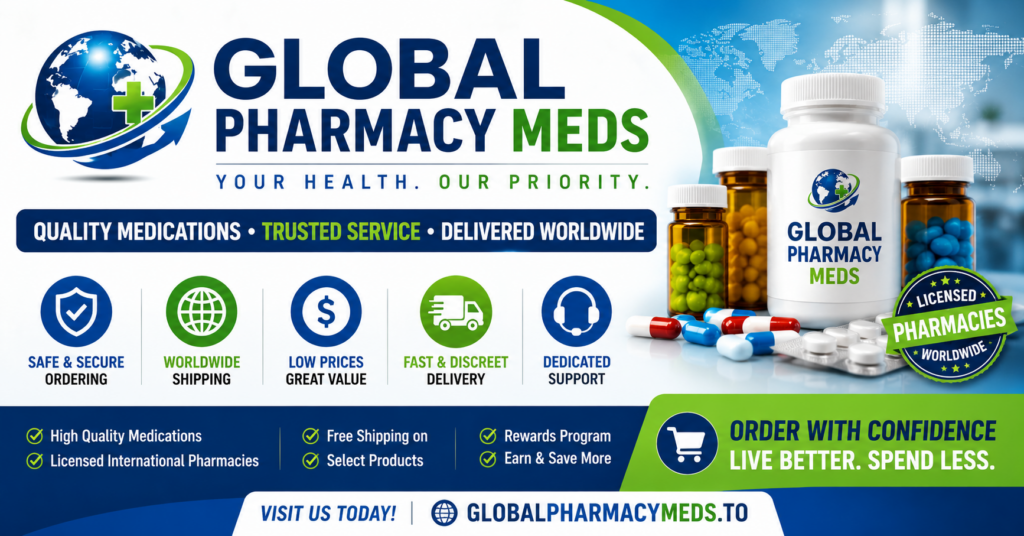
Global Pharmacy Meds
Quality Medications. Trusted Service. Delivered Worldwide.
Looking for affordable access to prescription medications from licensed international pharmacies?
At Global Pharmacy Meds, you can save significantly on many medications while enjoying convenient home delivery and a simple ordering process. The company has been helping connect customers with lower-cost prescription options through its network of licensed international pharmacies for many years. Customers can also take advantage of FREE shipping on many RxSelect medications and earn rewards on qualifying purchases.
✅ Safe & Secure Ordering
✅ Worldwide Delivery
✅ Competitive Prices
✅ Licensed International Pharmacies
✅ Free Shipping on Select Products
✅ Rewards Program Available
🌐 Visit:
Global Pharmacy Meds
Popular Medications Highlighted on the Site
💤 Modafinil (Modalert)
Wakefulness medication commonly prescribed for certain sleep disorders.
Explore Global Pharmacy Meds
🧠 Armodafinil (Waklert)
A related wakefulness medication used for specific sleep-related conditions.
Explore Global Pharmacy Meds
🩺 Pregabalin (Maxgalin)
Used in certain nerve pain conditions, fibromyalgia, and some seizure disorders.
Explore Global Pharmacy Meds
💉 Insulin Glargine (Lantus)
Long-acting insulin prescribed for diabetes management.
Explore Global Pharmacy Meds
❤️ Tadalafil (Tadacip)
Prescription medication used for certain erectile dysfunction and prostate-related conditions.
Explore Global Pharmacy Meds
🫁 Fluticasone/Salmeterol (Seretide Accuhaler)
Prescription inhaler used for certain asthma and COPD conditions.
Explore Global Pharmacy Meds
Better Health. Lower Costs. Delivered to You.
🌎💙 Global Pharmacy Meds – Your Health. Our Priority.
Disclaimer: Medication availability, pricing, shipping, and prescription requirements vary by medication and location. Prescription medications should only be used under the supervision of a qualified healthcare professional. The information on this website is for informational purposes only and is not a substitute for professional medical advice, diagnosis, or treatment.